


- फरवरी, 24 2026
- | Sell Gold
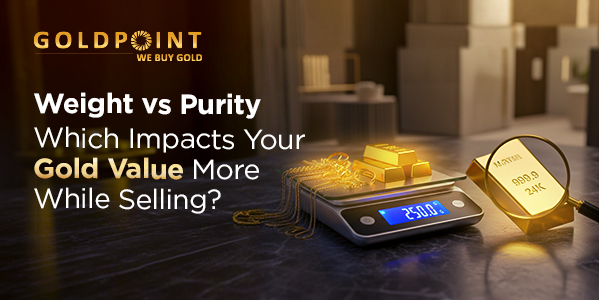
Weight vs Purity: Which Impacts Your Gold Value More While Selling?
If you have ever considered selling your gold, one question probably crossed your mind immediately: How much is my gold actually worth today?
Some people focus on how heavy their gold is. Some worry about the purity stamp. But the real truth? Both matter but not exactly in the same way. Once you understand the difference, it helps you make a better decision when selling gold and also get the best possible return.
In this blog, we will break it down simply so you don’t get confused.
What Determines the Value of Gold When Selling?
When you walk into a gold buyer like Muthoot Gold Point, your gold value is calculated based on two core factors:
- Gold Weight
- Gold Purity
These two elements work together, along with the current value of gold in the market, to decide how much money you receive.
Many people assume that heavier gold always means higher value. That’s not always true. Similarly, a high-purity ornament that weighs very little may not fetch much either. The real value lies in how these two factors balance each other.
Understanding Gold Weight: The Starting Point
Gold weight refers to how much your ornament or coin weighs, usually measured in grams. This is the most visible factor; you can feel it in your hand.
But here’s something important many sellers don’t realise: The total weight includes stones, clasps, solder, and other non-gold parts.
That’s why professional buyers carefully separate and calculate only the net gold weight before arriving at a final number. The higher the actual gold content by weight, the higher your gold value, but only if the purity is good.
So weight matters, but it doesn’t tell the full story on its own.
Gold Purity: The Real Game-Changer
Gold purity tells you how much pure gold is present in your jewellery. It’s usually expressed in karats:
- 24K – 99.9% pure gold
- 22K – About 91.6% pure
- 18K – 75% pure
- 14K – Around 58.5% pure
Here’s the key insight: A lighter 24K gold item can be worth more than a heavier 18K one.
Why? Because purity directly impacts how much actual gold is present. When selling, buyers don’t pay for design, making charges, or emotional value, only the gold content.
This is why purity often has a bigger influence on your gold selling price than weight alone.
So, Weight or Purity — Which Matters More?
Let’s settle this clearly.
- Weight decides the quantity
- Purity decides the quality
But when it comes to calculating gold value, purity plays the more decisive role.
Think of it like this: You’re not paid for how big the ornament looks, you’re paid for how much pure gold it contains.
That’s why two chains of the same weight can have very different values if their purity levels differ.
How the Current Gold Price Fits In
Even with the same weight and purity, the amount you receive can change daily. That’s because gold prices fluctuate based on global markets.
The current value of gold is determined by international gold rates, currency movements, and market demand. Reputed buyers update prices frequently to stay aligned with real-time rates.
This is why it’s always a good idea to check rates on the day you plan to sell, rather than relying on old assumptions.
Using a Gold Value Calculator
Many people search online for a gold value calculator before selling, and that’s a smart first step.
These tools give you an estimate based on:
- Gold weight
- Purity
- Current market rate
However, calculators provide approximate values, not final payouts. Actual valuation may differ slightly due to:
- Net gold weight after removing stones
- Purity test results
- Live market pricing at the time of sale
Use calculators for clarity, but rely on a trusted professional for accuracy.
Common Myths That Can Reduce Your Gold Value
Before you sell old gold, let’s clear a few misunderstandings:
Myth 1: Old jewellery is worth less
Truth: Gold doesn’t lose value with age. Only purity and weight matter.
Myth 2: Heavier always means better
Truth: Lower-purity gold can weigh more but be worth less.
Myth 3: Branded jewellery gives higher returns
Truth: Brands matter when buying, not when selling.
Knowing these facts protects you from underestimating your gold selling price.
How Muthoot Gold Point Ensures Fair Value
At Muthoot Gold Point, the valuation process is transparent and customer-friendly:
- Advanced purity testing using certified machines
- Accurate weight assessment
- Rates linked to the current value of gold
- Clear explanation of how your gold value is calculated
There are no hidden deductions, and every step is done in front of you, so you know exactly what you’re being paid for.
Final Thoughts: What Should You Focus On?
If you’re preparing to sell old gold, here’s the takeaway:
- Purity has a stronger impact on value
- Weight still matters, but only alongside purity
- Gold prices change daily, so timing matters
- Transparency matters more than promises
Understanding these basics puts you in control and helps you make confident, informed decisions.
When you know how gold value is calculated, selling gold stops feeling complicated and starts feeling empowering.

Related Posts
Selling Gold Online vs Offline. Which Gets You Better Value?
- फरवरी, 24 2026
- | Sell Gold

Best Place to Sell Gold in Bangalore: Price, Purity & Trust
- फरवरी, 19 2026
- | Sell Gold

Common mistakes to avoid when selling gold in 2026
- जनवरी, 02 2026
- | Sell Gold

Record gold prices in India: Why now is a good time to sell
- जनवरी, 02 2026
- | Sell Gold

Should You Sell or Keep Your Gold Jewellery?
- सितम्बर, 03 2025
- | Sell Gold

मुथूट एक्जिम (प्र.) लिमिटेड (कीमती धातु विभाग) की एक इकाई मुथूट गोल्ड प्वाइंट, मुथूट पप्पाचन समूह का एक उपक्रम है। सोने का पुनर्चक्रण करने वाला राष्ट्रीय स्तर के संगठित क्षेत्र का यह पहला उपक्रम है।
हम तक पहुँचें
त्वरित कड़ियाँ
हमारी उपस्थिति
बेंगलुरु, कोयंबटूर , कोलकाता , दिल्ली , विजयवाड़ा , मुंबई , पुणे , नोएडा , इंदौर , विजाग , हैदराबाद, चेन्नई
Our Presence - States
Madhya Pradesh, Andhra Pradesh, Kerala, Telangana, Maharashtra, Tamil Nadu, Karnataka,
हमारा टोल फ्री नंबर

पंजीकृत कार्यालय
मुथूट एक्जिम प्राइवेट लिमिटेड
40/7384 मुथूट टावर्स, एम.जी. रोड,
एर्नाकुलम, केरल- 682035
इस पर हमें फॉलो करें
Copyright © Muthoot Exim Pvt 2026 - All Rights Reserved