


- ডিসে., 15 2025
- | Gold Investment, Gold Rate, Sell Gold
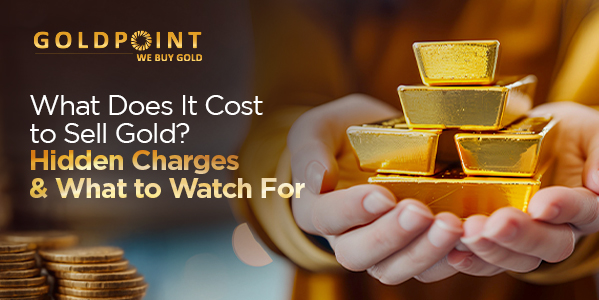
What Does It Cost to Sell Gold? Hidden Charges & What to Watch For
Thinking of selling your gold jewellery? Here’s the catch, the price you see is not always the price you get. From testing fees to purity deductions, the final amount can shrink quickly. A little awareness early on can make a big difference to what ends up in your pocket.
Understanding Deduction While Selling Gold
The process of selling gold involves several deductions that reduce the final amount you receive. These are not always obvious at first glance, which is why many sellers feel surprised when they realise how much less they get compared to their original purchase price.
The primary deduction while selling gold relates to making charges that were included when you originally purchased the jewellery. Making charges typically cover the labour costs of craftspeople, the cost of polishing and finishing, and wastage that naturally occurs during the jewellery-making process. When you sell your gold, these making charges are not refunded because they were paid for labour and craftsmanship, not for gold itself.
Additionally, the GST that you paid during purchase is not recoverable when selling. This means if you paid GST on the original purchase, it’s effectively an irrecoverable cost.
The Reality of Buyback Value
Understanding what affects the final price you receive is crucial. Many jewellers offer attractive buyback promises, but the actual deduction while selling gold can significantly reduce these figures.
Some buyers may claim to offer up to 90% of the jewellery’s original value, but this often comes with hidden conditions. Under certain promotional schemes, the actual buyback value might drop considerably, resulting in customers recovering far less than expected.
Hidden Charges You Should Know About
Beyond standard deductions, several hidden charges can eat into your returns:
Melting Charges: When your gold is melted down for assessment, some buyers levy a melting charge. While this is a legitimate cost, it should not be excessive. Confirm what the melting charge is before selling.
Evaluation Fees: Some buyers charge for the process of assessing your gold’s purity and weight. Ideally, this should be a free service, particularly at reputable gold-buying establishments.
Wear and Tear Deductions: Heavily damaged jewellery naturally commands lower prices; some buyers may unfairly penalise even lightly worn pieces.
Inflated Wastage Charges: During jewellery making, actual wastage is typically only 2-3%, but some sellers inflate this to 5% or higher, citing design complexity.
Premium Over Market Rate: Some buyers charge more than the actual market rate for gold, claiming that the published rates do not reflect their local pricing. Always verify the rate being applied before agreeing to sell.
How to Check Gold Purity Before Selling
Knowing how to check gold purity hallmark is essential before you sell. The hallmark system in India provides an official certification of gold quality.
To understand how to check BIS hallmark on gold, look for the BIS logo on your jewellery, which confirms certification by the Bureau of Indian Standards. The hallmark includes the purity mark, either as a karat number (22K, 18K, 14K) or a fineness number (916, 750, 585).
You can also verify your gold using the BIS CARE app by entering the HUID (Hallmark Unique Identification) code found on the jewellery. This free app provides instant verification of authenticity and purity, giving you confidence in what you are selling.
Getting the Best Return for Your Gold
To protect yourself when selling gold, take these steps:
Know the current market price: Stay informed about the actual market rate for gold so you can evaluate offers accurately.
Ask about all charges upfront: Do not hesitate to request a written breakdown of all deductions and charges before selling.
Get everything in writing: Ensure you receive a document showing the agreed price, weight, purity, and any applicable deductions.
Compare prices: Approach multiple buyers to understand the range of offers you might receive, rather than accepting the first offer.
Verify the gold: Before selling, confirm your gold’s purity using hallmark verification.
Is Gold a Good Investment?
Whether gold is a good investment depends on your financial goals and timeline. Gold can serve various investment purposes, as a store of value, a hedge against inflation, or part of a diversified portfolio. However, the costs associated with buying and selling jewellery should be factored into your investment calculations.
If you are specifically interested in gold investment plan options, consider that gold coins and bars typically have lower deductions on resale compared to jewellery, as they do not carry making charges. This makes them a potentially more efficient choice for pure investment purposes, while jewellery combines both functional wear and investment value.
Understanding the Complete Picture
When calculating whether you should sell your gold jewellery, do not focus only on the current market price. Instead, consider the various deductions and charges that will reduce your final proceeds.
At Muthoot Gold Point, we believe in transparent pricing and honest communication about all costs involved. Our scientific testing methods ensure accurate purity assessment, and we are upfront about our valuation process, so there are no surprises when you sell your gold with us.

Related Posts
Gold Recycling: What It Means & Why It’s Important
- ডিসে., 12 2025
- | Gold Investment, Gold Rate, Sell Gold

Gold in Your Locker Won’t Grow — Here’s What You Can Do Instead
- নভে., 28 2025
- | Gold Investment, Gold Rate, Sell Gold
How Often Should You Check the Gold Rate?
- নভে., 24 2025
- | Gold Investment, Gold Rate, Sell Gold
Gold Price Crash Explained: Key Reasons Behind the Recent Drop
- নভে., 20 2025
- | Gold Investment, Gold Rate, Sell Gold
How to Check Hallmark on Gold and Avoid Fake Jewellery
- অক্টো., 29 2025
- | Gold Investment, Gold Rate, Sell Gold

মুথুট গোল্ড পয়েন্ট, মুথুট এক্সিম (পি) লিমিটেডের একটি ইউনিট (মূল্যবান ধাতু বিভাগ) যা হল মুথুট পাপ্পাচান গ্রুপের একটি উদ্যোগ। সোনার পুনর্ব্যবহারের দিকে প্রবেশের ক্ষেত্রে এটি প্রথম জাতীয় স্তরের সংগঠিত সেক্টর জাতীয় উদ্যোগ।
আমাদের পৌঁছান
দ্রুত লিঙ্কগুলি
আমাদের উপস্থিতি
বেঙ্গালুরু, চেন্নাই, কোয়ম্বাটোর, দিল্লি, মুম্বই, এরনাকুলাম, কলকাতা, মাদুরাই, বিজয়ওয়াড়া ও ত্রিচি
Our Presence - States
Madhya Pradesh, Andhra Pradesh, Kerala, Telangana, Maharashtra, Tamil Nadu, Karnataka Uttarpradesh, Delhi NCR, West Bengal, Haryana, Rajasthan, Odisha, Punjab, Uttarakhand
আমাদের টোলফ্রি নম্বর
আমাদের টোলফ্রি নাম্বারে কল করুন এবং কথা বলুন গ্রাহক পরিষেবা প্রতিনিধি।

নথিভুক্ত দপ্তর
মুথুট এক্সিম প্রাইভেট লিমিটেড
৪০/৭৩৮৪ মুথুট টাওয়ারস, এম.জি. রোড,
এরনাকুলাম, কেরালা- ৬৮২০৩৫
আমাদেরকে অনুসরণ করুন
Copyright © Muthoot Exim Pvt 2025 - All Rights Reserved